Try Jeff Bezos’ 1-Hour Morning Rule with Us: The 30-Day Clarity Challenge
If you’re an ambitious female founder who wants to work smarter (not harder), you’re in the right place. Today I’m sharing the simple, science-backed morning shift I’m testing for 30 days: one screen-free hour right after waking.
I’m doing it with my co-host, Cinthia Pacheco of Digital Bloom IQ, and I built a Morning Clarity Tracker so we can actually measure how it impacts focus, mood, creativity, and productivity. We have a free tracker at the bottom!
Why the morning matters (and why I’m changing mine)
Mornings have a special energy. When I roll over and start scrolling news, my day is basically cooked. I’ve been craving more clarity, creativity, and protected time to set the tone before I dive into client work and content. So I’m trying the “one-hour rule”: at the bare minimum, no phone/screens for the first hour after waking.
The one-hour rule (the simple version)
No email, no social, no TV, no news apps—no passive scrolling. Emergencies only if needed. You can still use your device to press play on music or an audiobook without falling into a feed. The goal is zero screen-to-face time so your brain can boot up without cortisol spikes.
Replacement activities menu (pick 1–3)
Instead of scrolling, try:
- Move your body: light stretching, yoga, a walk outside, or a quick dance session.
- Nourishing breakfast and real conversation (phones away).
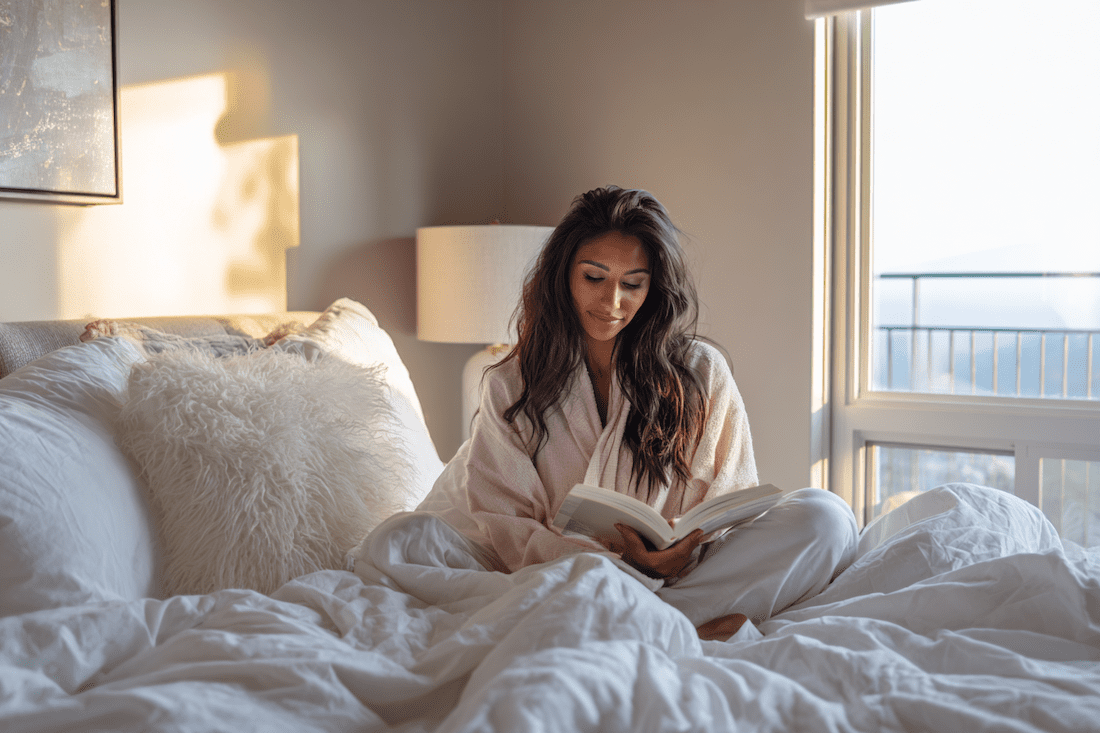
- Read or listen to a book—educational, inspirational, or purely joyful.
- Gratitude or brain-dump journaling (3–5 things you’re grateful for + any ideas rushing in).
- Music to set the vibe.
- Meditation or breathwork (start with 5–10 minutes; box breathing works wonders).
Plan your 1–3 activities the night before so you don’t replace scrolling with decision fatigue.
How I’m tracking it (because data > vibes)
I created a Morning Clarity Tracker (super easy drop-downs) to log:
- Wake-up time
- Activities you chose
- How you felt (calm, restless, energized, etc.)
- Any slip-ups (no shame, just notes)
- Quick reflections
We’ll compare our weekly notes to phone Screen Time or Digital Wellbeing stats so we can see the impact, not just guess.
Weekly check-ins (adjust without judgment)
At the end of each week, ask:
- Did avoiding screens help my clarity, mood, and energy?
- Was I more productive?
- What activities lit me up—and which can I skip?
- Do my Screen Time screenshots show progress?
Tweak as needed. If an hour spikes your stress, try 30 minutes and build from there.
End-of-month reflection (make it real)
After 30 days, review:
- Focus, creativity, productivity, and mental health
- Whether you actually stuck with it (and why)
- If you’ll keep going—and how to adapt it to your real life
If it “worked” but you still resist it, journal on what’s underneath that. Sometimes the mindset shift is the real work.
Day 1: honest results from both of us
I set up my phone the night before with only Audible open so I could tap play eyes-closed. Full transparency: I felt anxious at first—like I was “wasting” my early work time. Around the 38-minute mark, the anxiety dropped and the rest of the hour felt amazing. Cinthia journaled, ate without multitasking (progress!), and felt noticeably calmer. We’re calling that a win.
Guardrails that help (because…phones are sticky)
- Phone Screen Time schedules (or apps like Opal) to block socials late at night and early AM
- Zero notifications except true emergencies
- A playlist you can start hands-free
- Accountability—do this with a friend (hi, Voxer buddies)
Try it with us
Pick your 1–3 activities, print or copy the tracker, and give yourself grace. If you slip, note it and keep going. We’ll share a mid-month check-in and a 30-day results episode so you can compare notes with us.
If you found this helpful, share it with a fellow founder who could use a calmer, clearer morning.
UPDATE: What Happened After 30 Days (Our Honest Results)
If you’ve been wondering, “Okay, but did this actually work for you two?” — here’s the real talk.
Cinthia and I did the Morning Clarity Challenge for all of October. That meant:
No phone, no email, no social, no news, and no work for the first hour of the day. Just the Morning Clarity Tracker, simple habits, and a lot of curiosity.
What changed for us
Here’s what we noticed over the month:
- The phone habit broke faster than we expected: The first few days felt weird. We both had that “reach for my phone” reflex. But after about 5 days, it was already easier to leave the phone on the nightstand and just start the day.
- Mornings felt calmer (and our families felt it too): Cinthia found she was way more present with her daughter during breakfast instead of half-listening while scrolling. My husband even said, “Mornings feel easier now. You seem more relaxed.” That was a big sign this was working.
- We stopped starting the day in panic mode: Before, I would wake up and go straight into email or news — which often meant stress before I even got out of bed. Now, I check urgent things the night before, and my mornings feel like my time again.
- It became a habit, not a fight: By the middle of the month, we weren’t forcing it. It was just “how we do mornings now.” I even stretched that first hour into two on slower days so I could listen to a book and ease into work.
- We only “broke” it once: There was one day in October where I slipped and started the day with client messages and email. Guess what? My whole day felt off. That one day was enough proof that the new way was better.
How the tracker helped
The Morning Clarity Tracker wasn’t just a cute extra — it helped us see patterns:
- Which activities made us feel calm, happy, or focused
- Which ones we could skip
- How our mood and energy lined up with less screen time
- How often we actually stuck to the one-hour rule
When we looked back at notes and phone Screen Time, the data matched how we felt:
Less morning scrolling = more calm, better focus, and nicer mornings for everyone around us.
What We’re Trying Next: 1 Screen-Free Hour at Night
We loved the morning change so much that we’re now testing a night-time version in November.
The goal: One hour at night with no TV, no doom scroll, no social apps — just rest, real life, and winding down.
Here’s what that looks like for us:
- Pick a “screens off” time: We’re starting with something simple like 10:00 PM. For you, it might be 9:30 PM or even 11:00 PM if you’re usually up late. You can always move it earlier later.
- Make it a house rule (with some flex): For me and my husband, that looks like:
- TV off at a set time
- Phones down unless it’s a true emergency
- Weekend “free nights” where we can watch a show or play games without rules
- Swap in real rest, not more noise: Some ideas we’re trying:
- Reading or listening to a book with phones set aside
- Talking with our partners instead of zoning out side-by-side on screens
- Light planning for the next day so mornings feel smoother
- Simple, quiet hobbies that help our brain slow down
- Use tools to help your future self: Cinthia uses an app called Opal to block Instagram, WhatsApp, and other time-suck apps after a certain hour. You can also use built-in Screen Time limits on your phone to do the same thing.
The point isn’t to be perfect.
The point is to give your brain and body a real “off” ramp at the end of the day so you’re not going to sleep wired and waking up tired.
Want to Join Us for the Evening Screen-Free Hour?
If you loved the idea of the Morning Clarity Challenge, this is the next step:
- Pick your evening “screens off” time for the next 30 days.
- Choose 2–3 simple replacement habits (read, talk, stretch, journal, or just rest).
- Use the same Morning Clarity Tracker or a fresh page to jot down:
- What time you turned screens off
- What you did instead
- How you felt that night and the next morning
We’ll be checking back in on the podcast with our results, what worked, what didn’t, and how this ties into working smarter as female founders — not burning out on our phones.
👉 Scroll up, grab the tracker from Episode 40, and try the morning and/or evening challenge with us.
Small shifts like this can quietly change how your whole day feels. 💛
📌 DON’T FORGET TO PIN IT!