Pinterest Marketing for Service Providers: How to Attract Clients While You Sleep

flatlay workspace for female entrepreneur jvm stock photos

Pinterest Marketing for Service Providers: How to Attract Clients While You Sleep

If you’ve been posting your heart out on Instagram chasing trends and still not seeing consistent leads, I totally get it. Here’s the truth — your dream clients are probably hanging out somewhere quieter… somewhere they’re actually looking for help, not just scrolling for entertainment.

Yep, I’m talking about Pinterest.

I’ve used Pinterest to grow my own six-figure business and helped hundreds of female service providers like photographers, wedding pros, coaches, and other creatives. And the best part? You don’t need to dance on Reels or spend every waking moment online.

In this post, I’m breaking down exactly how to use Pinterest to attract clients and build a marketing system that keeps working even when you’re not.

Create Consistent Content Without the Burnout

Pinterest loves fresh content — but that doesn’t mean you need to post every single day, but you need pins going out each day.

The secret is consistency that fits your life.

Most of my clients spend about one hour a week on Pinterest marketing using my batching system. They repurpose blog posts, videos, podcast episodes, lead magnets, and services into multiple Pins that drive traffic all week long.

You don’t have to start big — once a week is enough when it’s done strategically. Think of Pinterest as your long-game traffic engine. You post once, and it keeps bringing you visitors for months (and often years).

Pro tip: Use a scheduler like Tailwind and batch your Pins all at once. It’s like setting your marketing on cruise control.

Speak to What They’re Searching For

The magic of Pinterest is that people come to it with a goal. They’re planning, researching, or dreaming about something they want to do next.

So before you create, ask yourself this:

“What is my ideal client typing into that search bar when they’re ready to take action?”

If you’re a wedding photographer, it might be San Jose vineyard wedding inspiration.  If you’re a coach, maybe it’s how to get clients without social media.

Create content that answers these searches directly. When you solve a problem or ease a pain point, you naturally build trust — and that’s where the conversion begins.

I love using my Feel, Felt, Found storytelling method:

“I know how you feel. I’ve felt that way too. But here’s what I found that really works.”

It connects, educates, and converts all at once.

Want help with Pinterest?

The Club is where service providers learn how to make Pinterest their lead-generating bestie. You’ll get monthly action plans, keyword sessions, and strategy support to grow your traffic, leads, and visibility—without spending hours online.

Use Keywords Like a Pro

Pinterest isn’t a social media platform — it’s a visual search engine. Think of it as SEO with prettier pictures.

Your captions, titles, and even image file names help Pinterest understand who to show your content to. Here’s how to start:

  • Write down short-tail keywords like Pinterest marketing or Bay Area brand photography.
  • Then add long-tail keywords like Pinterest for service providers or how to grow your coaching business with Pinterest.

Sprinkle them naturally throughout your Pin titles, descriptions, profile, and even on the text overlay of your Pins. And remember: keywords aren’t about gaming the system — they’re about helping Pinterest connect your content with the right people.

Pro tip: Inside The Club, we do keyword brainstorm sessions a few times a year to help members find the perfect words for visibility and growth.

Make Your Visuals Work Harder

Pinterest is visual, but that doesn’t mean you need fancy designs. You just need clarity.

Here’s what works best for service providers:

  • Use your brand colors, fonts, and website address for recognition.
    Keep designs clean and text easy to read on mobile.
  • Add a headline that solves a pain point (How to Book Clients from Pinterest).
  • Include a simple call-to-action like Learn More or Download Free.

You can create gorgeous, on-brand Pins in Canva in minutes — no design degree needed.

If you want a head start, grab my Canva customizable 10 free Pin templates. 

Pro tip: Mix static and video Pins for your blogs, freebies, and services to keep your content fresh and engaging.

Convert the Clicks

Traffic is great — but it means nothing without conversions. Most Pinterest users are new to your business, so your job is to guide them toward a small win.

Here’s how to optimize for conversions:

  1. Link to related content like blogs, podcasts, or YouTube videos.
  2. Add a freebie or email opt-in to capture leads.
  3. Include a clear call-to-action (CTA) in every post — and put it in the middle of your blog since not everyone reads to the end.

Pinterest is the top of your funnel — the start of a relationship that leads to sales later.

One of my photography clients doubled her bookings just by linking her free wedding guide and inquiry form to every single Pin. No ads. No daily posting. Just a smart Pinterest system.

Ready to Bring in Clients While You Sleep?

Pinterest isn’t about luck — it’s about strategy, consistency, and systems that do the work for you.

If you’re ready to stop guessing what to post and start generating clients with ease, check out The Club, where we build your Pinterest strategy together step-by-step.

Or if you’d rather hand it off completely, explore my Pinterest Management Services and let my team handle it for you.

Either way, Pinterest can become your silent sales machine — and I’ll show you exactly how to make that happen.

DON’T FORGET TO PIN IT!

A Pin that says Stop Scrolling, Start Growing Pinterest Marketing for Service Providers
A Pin Saying "Pinterest That Converts Pinterest Marketing for Service Providers"
A Pin saying, "Attract Clients While You Sleep Pinterest Marketing for Service Providers"
A Pin saying, "One Hour a Week Strategy Pinterest Marketing for Service Providers"
A Pin saying The Silent Sales Machine Pinterest Marketing for Service Providers

How to Build a Pinterest Keyword Strategy That Actually Works for Service Providers

How to Build a Pinterest Keyword Strategy That Actually Works for Service Providers<br />
 by Jen Vazquez Media

How to Build a Pinterest Keyword Strategy That Actually Works for Service Providers

If you’re a service-based business owner, here’s the truth: Pinterest can be your secret weapon, but only if you’re using the right keywords. Unlike Instagram or TikTok, Pinterest isn’t a social platform—it’s a visual search engine. That means your dream clients are searching for exactly what you offer. The question is—are you showing up in those searches?

Why Pinterest SEO Matters for Service Providers

Pinterest isn’t just for recipes and DIY inspo. It’s a powerhouse search engine where people are actively planning and looking for services—yes, even local ones. As a coach, photographer, or wedding pro, this is huge. Your content can drive traffic not just for weeks, but for years. I still get leads today from a pin I created ten years ago. That’s the magic of Pinterest SEO and keywords—evergreen content that works on autopilot.

What Long-Tail Keywords Actually Do for You

Short-tail keywords like “Pinterest marketing” are crazy competitive. But long-tail keywords—like “Pinterest marketing tips for wedding photographers”—narrow your reach to exactly who you want to work with. They have less competition, attract clients closer to booking, and they even boost your visibility on Google since Pinterest ranks so well there.

How to Find the Right Keywords Without Guessing

Start by searching the way your client would:

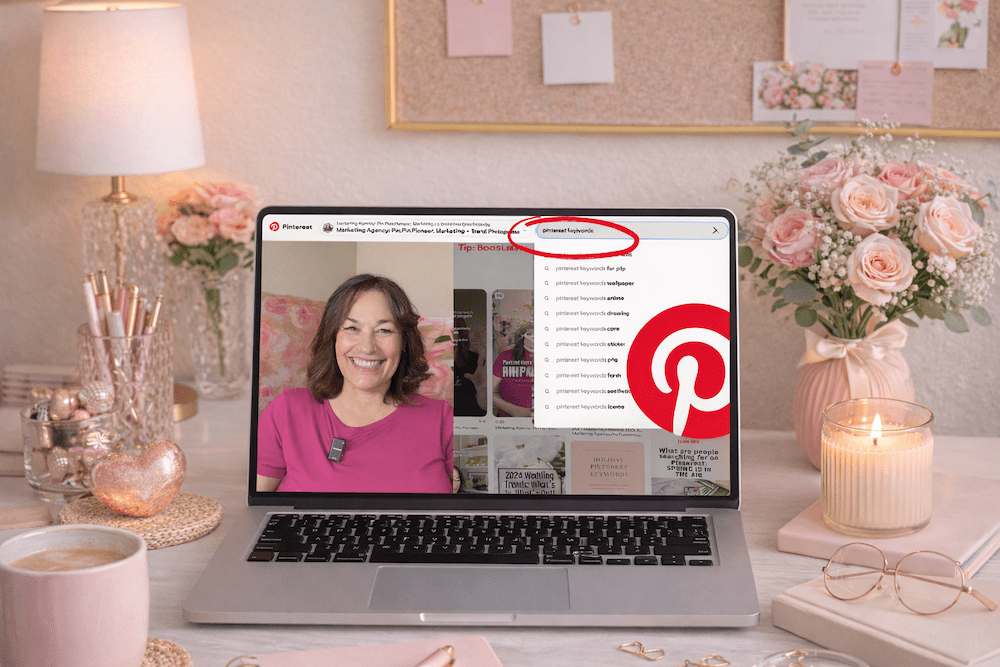
  • Use the search bar and jot down Pinterest’s auto-suggest results.
  • Pay attention to those colorful “search bubbles” (keyword gold!).
  • Check Pinterest Trends (trends.pinterest.com) to see what’s gaining traction.

And here’s a biggie—ditch your industry lingo. Clients aren’t searching for “eSessions,” they’re searching for “engagement photos San Jose.” Speak their language, not yours.

Build a Keyword Bank to Save Your Sanity

Once you gather ideas, build a keyword bank. This could be a simple doc where you list your core topics (like coaching, brand photography, marketing workflows, or AI) and all the variations you find in searches. A keyword bank means no second-guessing when it’s time to pin—you just grab what you need and keep moving.

Want to make it even easier? Grab my free keyword builder inside the Pinterest Vault.

Turn Pinterest Into Your Lead Machine

Stop guessing what to post on Pinterest and start seeing real results. With Pinfluence, I’ll optimize your profile, boards, and keywords so your content works on autopilot. Think of it as a power clean for your Pinterest—done-for-you SEO, a keyword bank you can actually use, and a strategy that attracts dream clients month after month.

Where to Use Keywords on Pinterest

Keywords aren’t just for pin titles and descriptions (though they’re essential there). Use them in:

  • Your board titles and descriptions
  • Your Pinterest profile (yes—even your name!)
  • The file name of your Canva graphics before uploading
    Basically, if it’s text, it’s searchable on Pinterest. Use it wisely, but keep it natural—remember, you’re writing for humans, not robots.

Make Pinterest Work for You on Autopilot

When you create a keyword-rich strategy upfront, you don’t need to overthink every single pin. Your content consistently appears in searches, generating leads while you focus on serving your clients. That’s how you market smarter, not harder.

So the next time you sit down to pin, ask yourself: Am I showing up for the keywords my dream clients are searching? If the answer’s no, let’s fix that. Check out Pinfluence here, and let’s turn your Pinterest into a lead-generating machine.

DON’T FORGET TO PIN IT!

Long-Tail Keywords Win How to Build a Pinterest Keyword Strategy That Actually Works for Service Providers | Jen Vazquez
Evergreen Pin Power How to Build a Pinterest Keyword Strategy That Actually Works for Service Providers | Jen Vazquez
Pinterest for Service Pros How to Build a Pinterest Keyword Strategy That Actually Works for Service Providers on Marketing Strategy Academy with Jen Vazquez
Pinterest SEO Secrets How to Build a Pinterest Keyword Strategy That Actually Works for Service Providers |  Jen Vazquez
Pinterest Keyword Bank How to Build a Pinterest Keyword Strategy That Actually Works for Service Providers | Jen Vazquez

25 Must-Know Pinterest Marketing Answers for Service Providers Who Want More Leads

Everything You’ve Wanted to Know About Pinterest Marketing—Answered in One Place

Hey, hey! If you’ve ever found yourself Googling how does Pinterest marketing even work? or wondering why your pins aren’t doing anything, friend, this one’s for you.

I’m sharing the top 25 questions I get asked constantly—by clients, students, and curious service providers sliding into my DMs. And I’m giving you the real answers, with zero fluff, so you can finally start using Pinterest to bring in traffic, grow your email list, and make your marketing actually work for you (even when you’re off sipping margaritas).

Let’s dive in. Grab your fave drink—coffee, tea, tequila… no judgment here!

1. Is Pinterest a social media platform?

Nope! It’s a visual search engine—think Google or YouTube. It’s designed for discovery, not engagement. That means your content has a much longer shelf life. I’m talking years of traffic from one pin.

2. How long does it take to see results?

Anywhere from 6 weeks to 6 months depending on your niche and consistency. It’s a long game like blogging, but so worth it.

3. How often should I pin?

Start with one pin a day. That’s all you need. Consistency beats volume, every time.

4. What does pinning consistently mean?

It means fresh, valuable content going out daily—either scheduled with Pinterest or Tailwind. You don’t need to be online every day, but your pins should be.

5. Can you pin too much?

Yes! More than 30 pins a day could trigger Pinterest’s spam filter. Stick to intentional, helpful, keyword-rich content.

6. How much third-party content should I pin?

A little is fine—especially when you’re just starting. But long-term, focus on pinning your own content.

7. Should I re-pin my own pins?

Not really. Instead, make a new pin with a fresh image for the same link. Pinterest loves new content.

8. What time of day should I pin?

Use Google Analytics to see when your site gets traffic, or let Tailwind choose optimal times for you. Bonus: update your schedule every few months.

9. Should I start pinning even if I don’t have much content?

YES. Start now. Every client I’ve worked with says they wish they started sooner. Even 3–5 blog posts is enough to get going.

10. Do I need a blog to succeed on Pinterest?

No—but it helps. You can pin podcasts, YouTube videos, freebies, and more. If you hate writing, repurpose your video or podcast into a blog post.

✨ Need help turning all this Pinterest info into an actual strategy?

That’s exactly what we do inside Pinterest Strategy Club! It’s my cozy little corner of the internet where I go live three times a month to teach, answer questions, and help service providers like you finally make Pinterest work without the overwhelm.

Think: smart strategies, done-with-you support, and a marketing plan you can actually stick to. You don’t need to figure this out alone—and you definitely don’t need to spend hours Googling. Come join us!

11. What are monthly viewers?

That’s how many people saw your pins. It’s a vanity number. Focus on outbound clicks and saves instead.

12. How many boards should I have?

Start with 10 niche boards. Aim for 3–5 relevant boards per blog or content piece so you can pin each post multiple times.

13. Do followers matter on Pinterest?

Not really. Most traffic comes from search, not followers. But followers don’t hurt either!

14. Should I niche down my Pinterest account?

Absolutely. Keep your boards and pins aligned with your niche so Pinterest knows who to show your content to. Secret personal boards!

15. What is Pinterest SEO?

It’s keyword optimization—using the words your audience searches for in your pins, boards, profile, and even file names.

16. Where do I use keywords?

Everywhere! Profile name, profile description, board titles, board descriptions, pin titles, pin descriptions, website copy—yep, even the name of the image file you upload.

17. How do I find Pinterest keywords?

Use Pinterest search, guided bubbles, Pinterest Trends, and even the Ads tool for keyword ideas. I also have a free keyword builder at learn.jenvazquez.com/resources!

18. Should I use hashtags?

Nope. Pinterest doesn’t use or prioritize them anymore. Focus on writing keyword-rich descriptions that feel human.

19. What are group boards and should I join them?

They’re shared boards with multiple contributors. Only join niche-relevant, active boards with good SEO. Skip spammy or catch-all boards.

20. How many group boards should I join?

No magic number—just be picky. Quality over quantity, always.

21. What size should my pins be?

Pinterest recommends a 2:3 ratio like 1000x1500px. Avoid square or landscape pins—they get lost in the feed.

22. Where can I find images for pins?

Use your phone (near a window!), hire a brand photographer, or use paid stock. Avoid free stock images—they’re overused and don’t stand out.

23. Can I still grow on Pinterest without ads?

YES! I’ve never paid for ads on either of my accounts. Organic growth is totally doable with a smart, consistent strategy.

24. How do I know if my pins are working?

Check Pinterest and Google Analytics monthly. Track outbound clicks, pin clicks, saves, impressions, and followers. I use my own Pinterest Analyzer to make this easy!

25. Should I be using Tailwind?

YES if you want to save time. I save 5+ hours per client weekly by batch-scheduling with Tailwind. It helps with consistency, analytics, and strategy.

Final Thoughts

There you have it—25 answers to the questions I get every dang week. Pinterest works if you work it smartly.

Want to make Pinterest your lead-gen machine? Join me in Pinterest Strategy Club—where I go live 3x a month and help you finally figure this thing out.

Which tip was your fave? Comment below or message me—I’d love to hear it!

Don’t Forget To Pin It!

jen vazquez in a black and white striped sweater holding an apple iphone talking about 25 Must-Know Pinterest Marketing Answers for Service Providers Who Want More Leads
Jen Vazquez holding a mirophone wearing a black shirt that is shoulderless talking about pinterest marketing
Jen Vazquez walking downtown in los gatos california in a black and white striped sweater talking on a cell phone
Jen Vazquez holding a microphone in a black shirt shoulderless talking about Pinterest SEO Basics by Jen Vazquez Media on Marketing Strategy Academy Podcast
Jen Vazquez in a black and white striped sweater holding a cell phone talking about. Can You Use Pinterest Without Blogging_ by Jen Vazquez of Marketing Strategy Academy Podcast

This May Be Why Your Pinterest Traffic Dropped & What You Can Do About It

If your Pinterest traffic has suddenly dropped and you’re wondering what happened, you’re not alone. A recent platform update has caused many creators to experience fewer outbound clicks despite having the same impressions and saves.

Thanks to expert insights from Kate Ahl of Simple Pin Media (my mentor and an official Pinterest educator), we now understand exactly what changed and how to fix it.  Let’s dig in.

What Changed with the “Visit Site” Button?

In the past, users could click on a pin, view the close-up, and then click again on the image to go directly to your site. Now, the pin image is no longer clickable.

Instead, Pinterest has introduced a small “Visit Site” button located below the pin image. On mobile or desktop, if this button doesn’t appear, users have no way to access your content.

This added friction has led to a decrease in click-through rates (CTR) and outbound traffic for many users.

Pinterest Pin Graphic saying "What Happened to the Visit Site Button on Pinterest? by Jen Vazquez Media"

No, Pinterest Isn’t Removing Links

Some creators feared that Pinterest was removing links altogether. But Malik Ducard, Pinterest’s Chief Content Officer, reassured users in an interview with Kate Ahl that links are “here to stay.”

However, for a small percentage of pins that don’t meet Pinterest’s evolving quality guidelines, the “Visit Site” button might be moved to a dropdown or hidden entirely. That’s the key issue here—and it’s one you can fix.

Why Pinterest Might Be Hiding Your Link

Pinterest stated that when a pin’s landing page is considered “low quality,” the Visit Site button becomes less visible. While the link isn’t removed, it’s no longer front and center, which drastically impacts traffic potential.

So what does Pinterest consider “low quality”? Let’s look at how to keep your pin (and your link) in good standing.

How to Get Your Pinterest Traffic Back

If your clicks are down, these are the actions Pinterest recommends—straight from what Kate Ahl shared in her recent mastermind sessions and podcast interview:

1. Enable Website Scraping

Make sure Pinterest can crawl your content by allowing its bot access via your robots.txt file. Blocking Pinterest’s crawler can prevent it from properly evaluating your site, and that can flag your pins as lower quality.

2. Avoid Broken or Redirected Links

Always double-check your links before publishing. A 404 page or broken redirect is an instant red flag. You should also test existing pins regularly to ensure that the links still work.

3. Match Your Pin Image to the Landing Page

The image(s) on your pin should appear on the page it links to (i.e. the blog). This visual consistency reassures Pinterest (and users) that the content is trustworthy and aligned.

Pro Tip: If you only have one main image on your blog, try using that same image for all your pins. We don’t know if this is exactly what’s intended by what Kate was told, but I’m testing right now to see if this gets better results.  if you have multiple images on the page, rotate between them—but try to not use unrelated visuals that may confuse Pinterest’s algorithm, especially AI photos which may not get as much reach.

4. Use Matching Keywords

The keywords used in your pin’s title and description should also appear on the linked page. Pinterest wants alignment between the content you’re promoting and where you’re sending users. If there’s a disconnect, Pinterest might hide your link button.

5. Provide Helpful, Valuable Content

If your blog post or landing page doesn’t deliver on the promise of your pin (e.g., misleading title or weak content), users will bounce—and Pinterest sees that. Bounce-back behavior tells the platform that the pin may not be helpful or trustworthy.

6. Improve Your Site Speed

Aim for a page load time under 4 seconds. This is especially critical on mobile, where slower speeds feel even more frustrating. If your site is sluggish, Pinterest may deprioritize your pins and hide your links.

7. Maintain a Safe, Trustworthy Domain

Follow Pinterest’s Merchant Guidelines, even if you’re not an e-commerce brand. That means:

  • No spammy ads
  • Clear contact information
  • Legitimate, user-friendly design
  • No clickbait

A “sketchy” or cluttered design, even unintentionally, could be penalized.

8. Submit a Support Ticket if Needed

If you’ve done everything right and your “Visit Site” button is still hidden, Pinterest’s system may need time to recheck your content. There’s currently no appeal process, but you can submit a support ticket to flag the issue.

A Quick Note on Pinterest Advice

My insights here are based on Kate Ahl’s blog and podcast, which offer some of the most up-to-date guidance available. That said, Pinterest is an ever-evolving platform, and changes can happen quickly—so nothing is ever truly set in stone.

I always hesitate to present things as black and white because Pinterest’s algorithm and business goals are fluid. What works today may shift tomorrow. But this is the most accurate and helpful information we have right now, and I wanted to make sure you had it.

As with all marketing strategies, treat this as a series of micro tests—observe what resonates, adapt to what the platform favors, and refine your approach to get the best results, whether that’s in traffic, engagement, or ROI (including the time you invest). Keep testing, keep adjusting, and keep marketing your business with intention.

Bottom Line

Pinterest’s latest update isn’t about punishing creators—it’s about making the platform better for users. They want people to find helpful, high-quality, and trustworthy content.

If your traffic is down, don’t panic. Review your recent pins and ensure:

  • Your links work
  • Your landing pages are fast and aligned
  • Your pins use accurate images and keywords
  • Your domain gives off “good vibes” (trust and quality)

Pinterest and Google both prioritize helpful content. Align your content strategy with what’s valuable to users, and the traffic will follow.

Don’t Forget To Pin It!

Pinterest pin with text: Why Your Pinterest Traffic Dropped Suddenly by Jen Vazquez Media
Pinterest Pin Graphic saying "What Happened to the Visit Site Button on Pinterest? by Jen Vazquez Media"
Pinterest Pin with these words: How to get Pinterest Clicks Back After the 2025 update by Jen Vazquez Media

Mastering Pinterest SEO: A Beginner’s Guide to Boosting Your Visibility

Pinterest on cell social squares photo

Mastering Pinterest SEO: A Beginner’s Guide to Boosting Your Visibility

When most people think of Pinterest, they picture beautifully curated boards filled with recipes, DIY projects, and outfit ideas. But for businesses and creators, Pinterest is so much more—it’s a visual search engine with massive potential for driving organic traffic to your website. If you’re not optimizing your Pinterest presence, you’re missing out on a key opportunity to grow your audience.

In this guide, we’ll break down the essential strategies for mastering Pinterest SEO, even if you’re just starting out. By the end, you’ll know exactly how to optimize your profile, pins, and boards to enhance discoverability and drive results.

1. Understanding Pinterest as a Search Engine

Pinterest isn’t just a social media platform; it’s a powerful search engine where users actively seek inspiration, ideas, and solutions.

Think of Pinterest users as proactive searchers, not passive scrollers. They’re typing in keywords like “wedding decor ideas,” “easy weeknight dinners,” or “how to start a podcast.” When you optimize your content with the right keywords, you’re positioning your business to be found by these eager searchers.

Key takeaway: Treat Pinterest like Google but with a visual twist—keywords are your best friend.

2. Optimizing Your Pinterest Profile for SEO

Your Pinterest profile is the foundation of your SEO strategy. A well-optimized profile tells Pinterest (and users) exactly who you are and what value you provide.

Profile Name and Bio:

  • Use a clear, keyword-rich profile name.
    Example: Instead of “Jane Doe,” try “Jane Doe | Wedding Photographer in San Francisco.”
  • Write a concise bio that highlights what you do and includes a primary keyword.
    Example: “Helping brides plan their dream weddings with stunning inspiration and expert tips.”

Profile Picture: Choose a professional and branded profile picture that aligns with your business. Remember people buy from people..

Claim Your Website: Claiming your website not only boosts your credibility but also unlocks valuable insights in Pinterest Analytics. Go to Settings > Claim > Enter your website URL to get started.  You can watch my video on how to do it here.

3. Researching and Using Keywords

Keywords are the backbone of Pinterest SEO. They guide users to your content.

How to Research Keywords:

  • Use the Pinterest search bar to explore popular suggestions. For example, type in “meal planning,” and Pinterest will have a drop down menu and you should grab all those phrases (long tail keywords)..
  • Utilize tools like Pinterest Trends, Google Keyword Planner, or Answer the Public for deeper insights.

Where to Use Keywords:

  • Pin titles and descriptions: Add relevant keywords naturally to describe the content.
    Example: Instead of “My Favorite Dinner,” use “Quick and Easy Dinner Recipes for Busy Weeknights.”
  • Board titles and descriptions: Optimize your board names like “Budget-Friendly Home Decor Ideas” instead of “My Home Stuff.”
  • Profile bio and alt text: Incorporate keywords to describe your images and brand.
  • The Name of Your Pin Graphic: People don’t think about this but what you name a pin that you create is also searchable with those keywords. 
  • Text On The Pin Graphic:  Yes Pinterest can read the words on your pin graphic so use keywords there.

FREE Pinterest Marketing Tools

Get Instant Access to 21+ Tools and 8 Masterclasses for FREE!

Are you ready to effectively use Pinterest marketing to grow your business? Look no further! We’ve curated a collection of over 15 essential Pinterest marketing tools and 8 expert-led masterclasses and challenges, all designed to help you succeed on this dynamic platform.

4. Creating SEO-Friendly Pins

Your pins are the heart of your Pinterest strategy. Make them count.

Design Tips for High-Performing Pins:

Writing Optimized Titles and Descriptions:

  • Titles should be clear, engaging, and keyword-rich.
    Example: “5 Tips for DIY Wedding Centerpieces” is more effective than “DIY Wedding.”
  • Write descriptions that tell a story and include keywords naturally.

5. Optimizing Pinterest Boards for SEO

Your boards are more than a place to save pins—they’re another opportunity to showcase your expertise.

Name Boards Strategically: Instead of generic names like “weddings,” go for specific, searchable names like “Spring Weddings in California”

Write Detailed Board Descriptions: Describe what users can find in the board using relevant keywords.
Example: “Explore modern kitchen designs with sleek appliances, innovative layouts, and space-saving solutions” And use all the 500 characters you are allowed to use different keywords that will result in more eyeballs on your content.

6. Tracking Your SEO Success on Pinterest

Once you’ve optimized your profile and content, track your progress to see what’s working.

Using Pinterest Analytics:

  • Monitor key metrics like impressions, pin clicks, saves, and the most important for businesses using Pinterest to market their business, outbound clicks. Get your free Pinterest Analyzer here.
  • Analyze your top-performing pins to identify trends.

Adjust Your Strategy:

  • Experiment with different keywords and pin designs.
  • See the pins in analytics that get the most outbound clicks and create more pins to that content with new images and keywords
  • Repin high-performing content (after a few months) to keep it active.  This should be done sparingly. Fresh new content is what Pinterest and Pinterest users crave.

7. Common Pinterest SEO Mistakes to Avoid

  • Keyword stuffing: Avoid overloading descriptions with just keywords. It looks spammy and doesn’t help rankings. Write a description that is something your best friend could read and understand.
  • Ignoring trends: Stay updated on Pinterest Trends to discover what’s popular.
  • Neglecting old content: If you have boards you have’t pinned to in 6 months, make pins for that board or consider merging it with another board that is used often.

Take the First Step Toward Pinterest Success

Pinterest SEO may seem overwhelming at first, but by starting with these basics, you’ll be well on your way to driving organic traffic and growing your audience. Remember, it’s all about consistency—optimize your profile, use keywords effectively, and track your results.

Ready to take your Pinterest strategy to the next level?

 Let’s work together to create a tailored plan that drives leads and saves you time.

Don’t Forget to Pin It!