Headshots vs Brand Photography: Which One Does Your Business Actually Need?
You’ve got a headshot. But somehow you still never have the right photo when you need one.
You’re creating an Instagram post and realize your headshot doesn’t fit the vibe. You’re writing a blog post and need something more casual. You want to show your workspace but all you have is that one professional shot of you smiling at the camera.
Sound familiar?
This is the reality for most service providers I work with. They invested in professional photos, but they’re still scrambling every time they need an image. And it’s not because their photographer wasn’t good. It’s because they booked the wrong type of session for what their business actually needed.
Today I’m breaking down the real difference between headshots and brand photography, which one service providers actually need, and why booking the wrong one is one of the most common (and expensive) content mistakes I see.
What’s Actually IN a Headshot Session
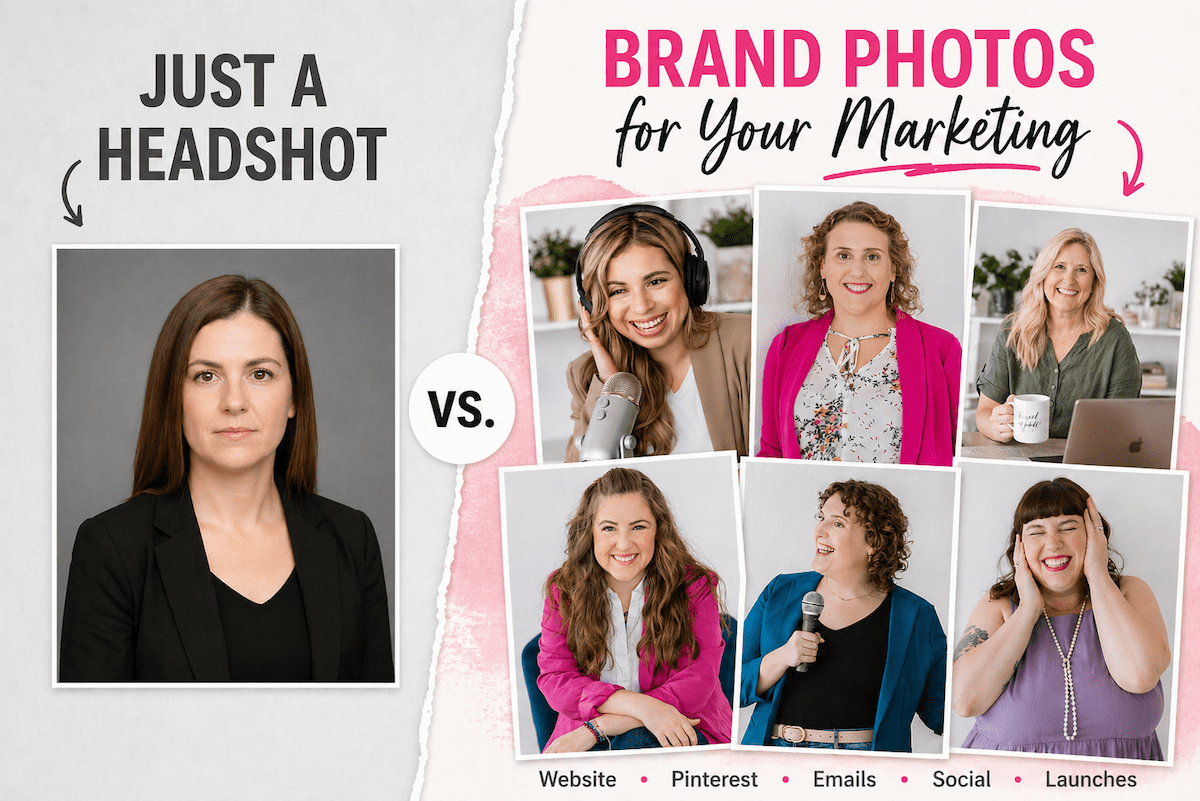
Let’s start with headshots. A traditional headshot session gives you 1-3 final images. They’re typically shot against a simple background, with your face and shoulders in focus. The goal is to look professional and approachable.
Headshots work great for:
- LinkedIn profiles
- Speaker bios
- About pages on your website
- Professional directories
- Corporate environments
But here’s what headshots don’t give you: variety, lifestyle context, or images that tell the story of what you actually do.
A headshot is designed to answer one question: “What does this person look like?” It’s not designed to answer: “What does this person do, how do they work, and why should I hire them?”
The Brand Photography Difference
Brand photography, on the other hand, is designed around your marketing needs. A strategic brand photography session gives you 50-100 images that work across your entire marketing strategy.
We’re talking about:
- You working with clients
- Your workspace or office setup
- Behind-the-scenes moments
- Product shots if you sell anything physical
- Lifestyle images that show your personality
- Multiple outfit options
- Different backgrounds and settings
- Various crops and orientations for different platforms
The goal isn’t just to show what you look like. It’s to show what it’s like to work with you, what your process looks like, and how you help people.
Brand photography answers the question: “What’s it like to work with this person, and how will they help me?”
When Headshots Work (And When They Don’t)
Here’s the truth: if you’re a service provider trying to grow your business online, a headshot alone won’t cut it.
Headshots work great if:
- You work in a corporate environment where consistency matters more than personality
- Your marketing strategy is primarily networking and referrals
- You rarely create content or have a small online presence
- You’re just starting out and need something basic for your website
But if you’re creating content regularly, using social media to grow your business, or trying to build a personal brand around your services, headshots will leave you scrambling.
Here’s why: every time you want to create content, you need an image that fits the message. A formal headshot doesn’t work for a behind-the-scenes Instagram story. A serious corporate photo doesn’t match a casual blog post about your morning routine.
When you only have 1-3 images to work with, you’re constantly hitting a wall.
Are you a photographer?
Ready to Plan Your Brand Photography Session?
Stop showing up to photoshoots unprepared! Get my free Photoshoot Workbook with mood board templates, outfit planning checklists, prop lists, and everything you need to plan a strategic session that gets you photos you’ll actually use for months.
The Content Creation Mistake That Costs You Time and Money
The biggest mistake I see service providers make: they book a headshot thinking it will solve their content creation problems.
They spend $500-800 on professional photos, get 2-3 beautiful headshot images, and then realize they still don’t have what they need for their marketing.
Six months later, they’re back to using phone photos or the same headshot over and over again. Their content starts to feel stale. They’re embarrassed to post because they’re using the same image repeatedly.
This is a system problem, not a creativity problem.
If you’re creating content regularly – whether that’s social media posts, blog articles, email newsletters, or website updates – you need a library of images that supports your content strategy.
That’s what brand photography gives you.
Ready to plan your brand photography session? Get my free Photoshoot Workbook with everything you need to plan a strategic session that actually supports your marketing goals.
How to Know Which One Your Business Actually Needs
Ask yourself these questions:
How often do you create content? If you’re posting once a week or more on any platform, you need brand photography.
What’s your marketing strategy? If you rely on content marketing, social media, or online visibility to grow your business, headshots alone won’t support that strategy.
How do you want people to feel about your business? If you want to seem approachable, authentic, and relatable, lifestyle brand photography will serve you better than formal headshots.
What’s your budget and timeline? If you need something quick and affordable to get started, a headshot might make sense as a first step. But plan to invest in brand photography as your business grows.
Here’s my general recommendation: if you’re a service provider who creates any type of content or uses social media for business, invest in brand photography. If you’re in a corporate environment or your marketing is primarily referral-based, headshots might be sufficient.
What Strategic Brand Photography Looks Like
When I work with service providers on brand photography sessions, we plan everything around their marketing goals.
We start with a content audit: what type of content do you create? What platforms do you use? What’s missing from your current image library?
Then we plan the session around those needs:
- Multiple outfit changes that reflect your brand personality
- Different settings that show various aspects of your work
- Lifestyle shots that feel authentic to how you actually work
- Detail shots of your workspace, tools, or products
- Images that work for different platforms and purposes
The goal is to walk away with enough images to support 3-6 months of content creation without repeating photos.
We’re not just taking pretty pictures. We’re building marketing infrastructure.
I have clients who bring champagne because they want celebration photos. Some throw confetti. Others bring their children because they’re an integral part of their business. One client was literally folding laundry on the ground during her session because that’s part of her brand story around work-life balance.
These photos have stood the test of time because they’re authentic and specific to what each business owner talks about on social media.
Finding the Right Brand Photographer
Not every photographer who says they do brand photography actually approaches the planning from a marketing angle. You want to make sure you’re working with someone who asks about your marketing goals before your session, not just your outfit choices.
Look for a photographer who:
- Plans a shot list that matches how you actually use content
- Thinks about variety: horizontal, vertical, and images with space for text overlays
- Captures lifestyle moments and detailed shots
- Delivers images that work across multiple platforms
- Provides guidance on how to use your photos strategically
At Jen Vazquez Media, every brand session starts with a marketing conversation. We talk about where you’re showing up, what you need images for, what’s coming up in your business, and any launches or rebrands you have planned.
We plan the session around those answers so that you leave with images you can actually use, not just images that look pretty in a gallery you never open.
The goal of brand photography isn’t beautiful images. It’s usable images that make your marketing easier, help you attract the right clients, and make it easy to show up online because you’ve got the perfect image for whatever you’re talking about.
If you’re ready to stop scrambling for photos every time you create content, it might be time to think bigger than a headshot. Your marketing deserves images that actually support your strategy.
Go introduce yourself on Pinterest, Instagram, or TikTok. I’ll be cheering you on from over here.