When Business Gets Hard: How to Turn a Client Loss into a Creative Comeback

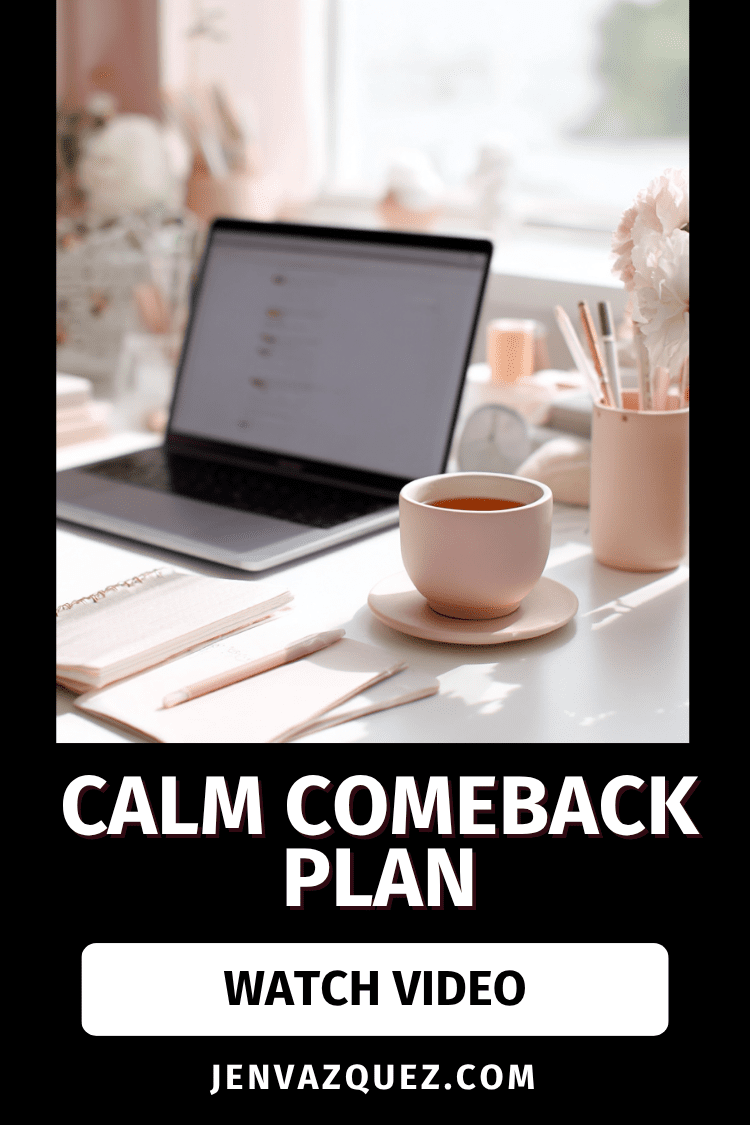
female entrepreneur desk with pinks and beige 4 jvm stock image

When Business Gets Hard: How to Turn a Client Loss into a Creative Comeback

We’ve all had those gut-punch moments in business — when a client leaves, a launch flops, or the money feels tight.

Yep, I’ve been there too (more than once).

But here’s the truth: the difference between businesses that keep growing and those that stall isn’t avoiding problems — it’s knowing how to move through them calmly and creatively.

In this episode of The Marketing Duo Podcast, Cinthia from Digital Bloom IQ and I talk honestly about what happens behind the scenes when business gets bumpy — and how we turn those moments into momentum.

When Things Don’t Go Your Way

You know that feeling — the “I can’t breathe” panic when a client cancels or revenue drops.
The first thing I do? Step away.

I’ll go outside, grab a cup of tea, and give myself permission to feel it.
Then, I start thinking like a CEO again.

You can’t problem-solve from panic.
Once you give your nervous system a break, your creativity comes back online — and that’s when the best ideas show up.

Reframe the “Problem”

Cinthia shared a perfect example: one of her agency services wasn’t profitable. Instead of ditching it, she looked closer and found a tool that automated most of the manual work.

That “problem” turned into a better, more profitable service.

When things go sideways, ask yourself:

➡️ What’s the real issue here?
➡️ Is there a faster, easier, or smarter way to handle it?
➡️ Could this roadblock actually reveal an opportunity?

Sometimes the fix is already waiting for you — it just needed a shake-up to show itself.

Work Closest to the Dollar

When business slows down, I focus on what I can control.

Here’s my go-to plan:

  1. Cut unnecessary expenses. Do you really need that subscription or nice-to-have app? Simplify first.
  2. Reopen proven offers. For me, that means launching family mini-sessions or offering a limited-time promo on my go-to service.
  3. Follow up. I reach out to warm leads who said “not yet.” A friendly check-in can quickly turn into new bookings.

Those three moves instantly make me feel more grounded and back in charge.

Are You Overwhelmed By Social Media

If you’re tired of pouring hours into social media and still wondering where your next lead is coming from, you’re not alone. So many amazing business owners are feeling that same burnout. That’s exactly why we created The Quiet Growth Accelerator — a 12-week program that helps you simplify your marketing with SEO and Pinterest so your visibility grows quietly in the background. Doors close November 1st — join us and finally take a breath.

Marketing Momentum Starts Small

You don’t need a major launch to recover. One new blog post, a fresh Reel, or a podcast pitch can open new doors.

Even the tiniest action builds momentum.

And remember — discomfort often leads to innovation. When things get uncomfortable, that’s where creativity starts to bloom.

The Mindset Shift That Changes Everything

Losing clients doesn’t mean you failed. It means you’re being invited to grow, adjust, and realign.

Sometimes, the business that comes after a loss is better than what came before.

So take a breath.
Look at your numbers.
Send that follow-up email.
And keep moving forward with confidence — you’ve got this.

Don’t forget to Pin it for later — because tough moments in business are easier when you’ve got a calm comeback plan waiting for you.


Pin with words: When Business Gets Hard: How to Turn a Client Loss into a Creative Comeback<br />
Pin with words: When Business Gets Hard: How to Turn a Client Loss into a Creative Comeback by Marketing Duo Podcast<br />

Try Jeff Bezos’ 1-Hour Morning Rule with Us: The 30-Day Clarity Challenge

women in bed with white bedding reading a book jvm stock image

Try Jeff Bezos’ 1-Hour Morning Rule with Us: The 30-Day Clarity Challenge

If you’re an ambitious female founder who wants to work smarter (not harder), you’re in the right place. Today I’m sharing the simple, science-backed morning shift I’m testing for 30 days: one screen-free hour right after waking. 

I’m doing it with my co-host, Cinthia Pacheco of Digital Bloom IQ, and I built a Morning Clarity Tracker so we can actually measure how it impacts focus, mood, creativity, and productivity.  We have a free tracker at the bottom!

Why the morning matters (and why I’m changing mine)

Mornings have a special energy. When I roll over and start scrolling news, my day is basically cooked. I’ve been craving more clarity, creativity, and protected time to set the tone before I dive into client work and content. So I’m trying the “one-hour rule”: at the bare minimum, no phone/screens for the first hour after waking.

The one-hour rule (the simple version)

No email, no social, no TV, no news apps—no passive scrolling. Emergencies only if needed. You can still use your device to press play on music or an audiobook without falling into a feed. The goal is zero screen-to-face time so your brain can boot up without cortisol spikes.

Replacement activities menu (pick 1–3)

Instead of scrolling, try:

  • Move your body: light stretching, yoga, a walk outside, or a quick dance session.
  • Nourishing breakfast and real conversation (phones away).
  • Read or listen to a book—educational, inspirational, or purely joyful.
  • Gratitude or brain-dump journaling (3–5 things you’re grateful for + any ideas rushing in).
  • Music to set the vibe.
  • Meditation or breathwork (start with 5–10 minutes; box breathing works wonders).

Plan your 1–3 activities the night before so you don’t replace scrolling with decision fatigue.

How I’m tracking it (because data > vibes)

I created a Morning Clarity Tracker (super easy drop-downs) to log:

  • Wake-up time
  • Activities you chose
  • How you felt (calm, restless, energized, etc.)
  • Any slip-ups (no shame, just notes)
  • Quick reflections

We’ll compare our weekly notes to phone Screen Time or Digital Wellbeing stats so we can see the impact, not just guess.

Weekly check-ins (adjust without judgment)

At the end of each week, ask:

  • Did avoiding screens help my clarity, mood, and energy?
  • Was I more productive?
  • What activities lit me up—and which can I skip?
  • Do my Screen Time screenshots show progress?

Tweak as needed. If an hour spikes your stress, try 30 minutes and build from there.

End-of-month reflection (make it real)

After 30 days, review:

  • Focus, creativity, productivity, and mental health
  • Whether you actually stuck with it (and why)
  • If you’ll keep going—and how to adapt it to your real life

If it “worked” but you still resist it, journal on what’s underneath that. Sometimes the mindset shift is the real work.

Day 1: honest results from both of us

I set up my phone the night before with only Audible open so I could tap play eyes-closed. Full transparency: I felt anxious at first—like I was “wasting” my early work time. Around the 38-minute mark, the anxiety dropped and the rest of the hour felt amazing. Cinthia journaled, ate without multitasking (progress!), and felt noticeably calmer. We’re calling that a win.

Guardrails that help (because…phones are sticky)

  • Phone Screen Time schedules (or apps like Opal) to block socials late at night and early AM
  • Zero notifications except true emergencies
  • A playlist you can start hands-free
  • Accountability—do this with a friend (hi, Voxer buddies)

Try it with us

Pick your 1–3 activities, print or copy the tracker, and give yourself grace. If you slip, note it and keep going. We’ll share a mid-month check-in and a 30-day results episode so you can compare notes with us. 

If you found this helpful, share it with a fellow founder who could use a calmer, clearer morning.

UPDATE: What Happened After 30 Days (Our Honest Results)

If you’ve been wondering, “Okay, but did this actually work for you two?” — here’s the real talk.

Cinthia and I did the Morning Clarity Challenge for all of October. That meant:
No phone, no email, no social, no news, and no work for the first hour of the day. Just the Morning Clarity Tracker, simple habits, and a lot of curiosity.

What changed for us

Here’s what we noticed over the month:

  • The phone habit broke faster than we expected: The first few days felt weird. We both had that “reach for my phone” reflex. But after about 5 days, it was already easier to leave the phone on the nightstand and just start the day.
  • Mornings felt calmer (and our families felt it too): Cinthia found she was way more present with her daughter during breakfast instead of half-listening while scrolling. My husband even said, “Mornings feel easier now. You seem more relaxed.” That was a big sign this was working.
  • We stopped starting the day in panic mode: Before, I would wake up and go straight into email or news — which often meant stress before I even got out of bed. Now, I check urgent things the night before, and my mornings feel like my time again.
  • It became a habit, not a fight: By the middle of the month, we weren’t forcing it. It was just “how we do mornings now.” I even stretched that first hour into two on slower days so I could listen to a book and ease into work.
  • We only “broke” it once: There was one day in October where I slipped and started the day with client messages and email. Guess what? My whole day felt off. That one day was enough proof that the new way was better.

How the tracker helped

The Morning Clarity Tracker wasn’t just a cute extra — it helped us see patterns:

  • Which activities made us feel calm, happy, or focused
  • Which ones we could skip
  • How our mood and energy lined up with less screen time
  • How often we actually stuck to the one-hour rule

When we looked back at notes and phone Screen Time, the data matched how we felt:
Less morning scrolling = more calm, better focus, and nicer mornings for everyone around us.

What We’re Trying Next: 1 Screen-Free Hour at Night

We loved the morning change so much that we’re now testing a night-time version in November.

The goal: One hour at night with no TV, no doom scroll, no social apps — just rest, real life, and winding down.

Here’s what that looks like for us:

  • Pick a “screens off” time: We’re starting with something simple like 10:00 PM. For you, it might be 9:30 PM or even 11:00 PM if you’re usually up late. You can always move it earlier later.
  • Make it a house rule (with some flex): For me and my husband, that looks like:

    • TV off at a set time
    • Phones down unless it’s a true emergency
    • Weekend “free nights” where we can watch a show or play games without rules

  • Swap in real rest, not more noise: Some ideas we’re trying:

    • Reading or listening to a book with phones set aside
    • Talking with our partners instead of zoning out side-by-side on screens
    • Light planning for the next day so mornings feel smoother
    • Simple, quiet hobbies that help our brain slow down

  • Use tools to help your future self: Cinthia uses an app called Opal to block Instagram, WhatsApp, and other time-suck apps after a certain hour. You can also use built-in Screen Time limits on your phone to do the same thing.

The point isn’t to be perfect.
The point is to give your brain and body a real “off” ramp at the end of the day so you’re not going to sleep wired and waking up tired.

Want to Join Us for the Evening Screen-Free Hour?

If you loved the idea of the Morning Clarity Challenge, this is the next step:

  1. Pick your evening “screens off” time for the next 30 days.
  2. Choose 2–3 simple replacement habits (read, talk, stretch, journal, or just rest).
  3. Use the same Morning Clarity Tracker or a fresh page to jot down:

    • What time you turned screens off
    • What you did instead
    • How you felt that night and the next morning

We’ll be checking back in on the podcast with our results, what worked, what didn’t, and how this ties into working smarter as female founders — not burning out on our phones.

👉 Scroll up, grab the tracker from Episode 40, and try the morning and/or evening challenge with us. 

Small shifts like this can quietly change how your whole day feels. 💛

📌 DON’T FORGET TO PIN IT!

Try Jeff Bezos’ 1-Hour Morning Rule with Us: The 30-Day Clarity Challeng

How to Handle Bad Google Reviews (Without Hurting Your Business)

How to Handle Bad Google Reviews (Without Hurting Your Business)

How to Handle Bad Google Reviews

We’ve all been there—your heart sinks the second you see that one-star review. It’s like a gut punch, right? But here’s the truth: negative reviews aren’t as bad as they seem. In fact, they can actually help your ranking on Google.

Google wants to see that you’re an active, legitimate business—and real businesses get all kinds of reviews, not just glowing ones. A mix of positive and negative reviews shows activity, credibility, and authenticity. As long as the majority of your feedback is good, a few bad ones can actually boost your visibility.

What Really Matters: How You Respond

As a consumer, I don’t immediately skip a business with bad reviews—I read them. What makes the biggest impression is how that business responds. Are they defensive or rude? Or do they show professionalism, empathy, and a willingness to make things right?

If someone leaves a negative review, thank them for the feedback (even if it’s hard to swallow). Respond with transparency, calmness, and care. Something like:

“Thanks so much for your feedback. We’ve reached out privately to make this right and appreciate you bringing it to our attention.”

That’s it—simple, thoughtful, and professional.

When Emotions Run High—Step Away

We all get triggered sometimes, especially when our business is personal. But emotional responses rarely help. If you feel charged, step away. Nothing is so urgent that you can’t take a few hours—or even a day—to cool down.

When you’re ready, use AI (yep, ChatGPT totally works here) to help you craft a neutral, polished response. You’ll be amazed how level-headed it can sound when your brain is still steaming.

Turning Reviews Into a Growth Strategy

Negative reviews can highlight opportunities for improvement—but positive reviews? Those are marketing gold. Don’t just wait for them to appear—ask for them!

Here’s what I do: every quarter, I reach out to clients whose results are shining (especially those with killer Pinterest analytics) and send them a direct review link from my Google Business Profile. I make it easy by including a few highlights they can copy and paste into their review.

Want to make it even easier? Give them a snippet from your last conversation or testimonial video and say:

“Would you mind pasting this into my Google Business Profile? Here’s the link!”

It takes them seconds, and the impact lasts for years.

Jen’s Photographer Hack: Reviews That Drive Bookings

When I was a wedding photographer, I used reviews strategically. I’d visit venues I loved, take photos, write a blog post about them, and then leave a Google review saying how beautiful the space was—complete with photos I’d taken.

Those images not only showcased my work but also linked me to that venue, which led to actual bookings. And because photos get “extra credit” in Google reviews, it helped boost my visibility too.

So whether you’re a local business or an online service provider—show up, stay active, and use reviews (good and bad) to your advantage.

Final Thoughts: Feedback = Visibility

At the end of the day, reviews—positive or negative—are signals that you’re visible, relevant, and worth talking about. So don’t fear them. Instead, use them as fuel to show your professionalism, your growth, and your commitment to serving your clients.

Negative reviews aren’t the end of the story—they’re just part of the journey.

DON’T FORGET TO PIN IT!

How to Handle Bad Reviews Like a Pro How to Handle Bad Google Reviews (Without Hurting Your Business) on Marketing Duo Podcast
Your Google Review Strategy Starts Here How to Handle Bad Google Reviews (Without Hurting Your Business) on Marketing Duo Podcast
Turn Negative Reviews Into SEO Wins How to Handle Bad Google Reviews (Without Hurting Your Business) on Marketing Duo Podcast
The Secret Power of Bad Reviews How to Handle Bad Google Reviews (Without Hurting Your Business) on Marketing Duo Podcast
Respond Without the Drama How to Handle Bad Google Reviews (Without Hurting Your Business) on Marketing Duo Podcast

297 | Scale with Data, Not Gut—Strategy-First for Female Founders with Rita Barry

Scale with Data, Not Gut—Strategy-First for Female Founders with Rita Barry of Rita Barry Co.

Scale with Data, Not Gut—Strategy-First for Female Founders with Rita Barry

If you’re new here, I’m Jen Vazquez. I help hyper-busy female service providers simplify their marketing on Pinterest, enabling them to book more clients, grow their income, and make a bigger impact. On this podcast, you’ll also find expert interviews and actionable tips to tackle marketing without the overwhelm. If that sounds like your jam, subscribe on YouTube or wherever you listen.

Meet Rita: The Strategy Brain Behind the Numbers

Today I’m chatting with Rita Berry of Rita Berry + Co., a digital marketing agency dedicated to helping female-founded businesses scale with a strategy-first approach. She prioritizes data-driven methods to refine customer acquisition—testing, iterating, and using actionable insights rather than gut feelings or fleeting trends.

Rita’s path wasn’t linear. She studied microbiology, calculus, and stats on a pre-med track, realized cutting people makes her squeamish (same!), moved into social services, then—thanks to a cross-country move and a two-year-old—taught herself to code during the late-2000s blogging boom. Websites led to marketing, which led to analytics, which led to an agency niche that female founders were desperate for. It turns out the combo of analytical rigor + deep empathy is a killer marketing skill set.

What “Strategy-First” Really Means

Strategy can feel ambiguous, so here’s Rita’s simple version: solve the right problems. Start with business goals first (profit, revenue, capacity), then set marketing goals that actually serve those business goals. From there, figure out the current state of play: what’s working, what’s not, and what’s missing.

A few anchors:

  • Map your customer journey. Literally flowchart it. You’ll see the missing steps or over-complication instantly.
  • Message maps + ideal client clarity. Say the same core things 85,000 times. Consistency builds trust.
  • Assess past campaigns. What performed, what didn’t, and why?
  • Fix tracking. It’s not glamorous, but you can’t improve what you can’t measure.

Data vs. Gut: How to Scale Beyond You

Gut instinct matters—but you can’t SOP your intuition to a team member. Data lets you transfer trust and decision-making beyond the founder. When you can see where people drop off (sales page, checkout, call booking), you can decide whether to amplify, refine, or rebuild. And yes, the human side still matters: pair analytics with customer interviews for the words and insights your audience actually uses.

Also, tools will disagree. That’s normal. Pick one source of truth for each metric and track it consistently. You’re looking for trends, not perfect absolutes.

The Overlooked Growth Lever for Service Providers

So many service pros lean hard on traffic tactics and ignore relationship marketing. Rita’s business broke open when she started showing up in small masterminds, building genuine connections, and letting trust transfer through communities. High-ticket, low-volume service work runs on referrals and reputation. Your best clients often need to trust you before the first Zoom call—and that trust usually comes via someone they already respect.

First Steps to Get Data Working for You

Keep it simple:

  1. Pick one metric that would change everything. For most service providers, it’s clients per month.
  2. Backwards-map the inputs. Calls booked, form fills, list growth, site visits—no more than five subordinate metrics.
  3. Track weekly. Use a tally, spreadsheet, or calendar—whatever you’ll stick with.
  4. Start at the bottom. Fix the nearest bottleneck to revenue first (e.g., sales call close rate), then move up.
  5. Rinse and repeat. Focus on one bottleneck until it’s no longer a problem.

Work With Rita + Freebie

Rita’s agency works exclusively with female business owners. Options include fractional CMO (install the strategy brain), full outsourced marketing, or filling key gaps like copywriting, funnels, analytics, and paid acquisition.

Freebie: an in-depth marketing assessment at marketingquiz.co to help you identify the right problem to solve first.

Where to Find Rita:

If you found this helpful, leave a review and—most importantly—schedule time to implement. Download Rita’s quiz, review your results, pick your one metric, and put it on your calendar this week.

DON’T FORGET TO PIN IT!

Pinterest Trends 2025 for Female Founders: How to Use Them for Growth

Pinterest Trends 2025 for Female Founders: How to Use Them for Growth

Hey there! Welcome to the Marketing Duo Podcast—your go-to show for smart, actionable marketing strategies and mindset shifts that help ambitious female founders work smarter, not harder. I’m Jen (Pinterest pro + Visibility Shop creator), and I’m joined by my co-host Cinthia (SEO expert at Digital Bloom IQ). Today I’m sharing three juicy Pinterest updates you can actually use to get found—especially if you’re running a service-based business and want more clicks and clients.

What We’re About (and why this matters)

Each week, we dive into the latest strategies, simple mindset tweaks, and growth tactics for tech-savvy founders. You’ll always leave with something you can apply right away. Today’s focus: Pinterest Fall 2025 trends, one new feature to be aware of, and how Hispanic Pinterest users are shaping what’s next. Get ready to work smarter, not harder.

Pinterest Fall 2025 Trend Report: What’s hot right now

I’m obsessed with this because creating content around what people are already searching for = faster traffic. Highlights:

  • Gen Z is leading sustainable style. “Dream thrift finds” searches are up 550%. “Vintage autumn aesthetic” is up 1,074%. “Thrifted kitchen” is up 1,012% and “thrifted décor” is up 285%.
  • Fashion vibes (prep revival!). “Women’s preppy outfits” jumped 47,680%. “2000s preppy aesthetic” is up 2,867%.
  • Caffeine-inspired tones. “Coffee brown pants outfit” is up 632%. “Vanilla latte blonde” is up 2,023%.
  • Home décor is going bold + vintage. “Art Deco vintage” up 805%; “1920s kitchen original” up 494%; “vintage tiles” up 1,107%; “terracotta tiles” up 833%; “blue ceramic tile” up 490%.
  • Office glow-ups. “Chic cubicle décor” is up 1,543% and “cubicle makeover ideas” is up 2,767%.
  • Goodbye minimalism, hello personality. It’s all about sustainability, uniqueness, and self-expression.

Pinterest even ran a limited Thrift Shop feature spotlighting curated thrift + vintage finds—AKA sustainability meets style.

“Cool… but I’m a service provider. How do I use this?”

You’ve got options:

  • Use trend analogies. “Thrift store finds are trending—here’s the ‘hidden gems’ inside your marketing you’ve been overlooking.” Tie the vibe to your topic.
  • Create seasonal content for your niche. Wedding photographer? Blog: “2026 Bridal Party Style: Thrifted Pastel Dresses (with Photo Ideas).” Coach? “From Minimalism to Personality: How to Show More ‘You’ in Your Brand.”
  • Build keyword clusters from trends. Grab 3–5 related keywords (like “vintage preppy” or “coffee brown”), then create pins pointing to your blog, services, or lead magnet.
  • Blend trends + evergreen. Trends give you lift; evergreen builds your library. Do both.

👉 Pro tip: Head to trends.pinterest.com monthly. Check what’s rising in your niche, note your best-performing pins, and make more pins for those winners. One trend check per month can seriously boost outbound clicks.

A quick note on a new feature

Pinterest launched “Where to buy” links for CPG advertisers to bridge inspo → purchase by showing in-stock retailer options from ads. I focus on organic, not ads, but it’s worth knowing where the platform is headed.

Spotlight: Hispanic Pinterest users shaping what’s next

One in three Hispanic adults in the U.S. uses Pinterest monthly, and Spanish-language searches grew 18% in 2025. This community blends tradition with modern aesthetics—fueling mainstream trends across food, wellness, style, and home. If you serve bilingual or multicultural audiences, this is your cue to create content (and pins) in both languages.

One action step to take this month

Open Pinterest Trends and your Analytics. Find one rising topic that aligns with your services. Make:

  • 1 blog post
  • 3–5 fresh pins
  • 1 short video

Repeat monthly. That’s it. Sustainable visibility, on repeat.

Need shortcuts?

That’s why I created The Visibility Shop—your one-stop spot for tools like pin templates, keyword guides, and Pinterest GPTs to speed up research + copy. Everything’s linked in the show notes.

If this was helpful, share it with a fellow founder who wants to work smarter, not harder. Subscribe so you’re first to know when new episodes drop. See you next time—and keep building your business with ease and impact!

Smarter AI, Calmer Marketing: Real Workflows We’re Using Right Now

36 | Smarter AI, Calmer Marketing: Real Workflows We’re Using Right Now on Marketing Duo Podcast

Hey there! Welcome to the Marketing Duo Podcast—your go-to for smart, actionable strategies and mindset shifts that help ambitious female founders work smarter, not harder. I’m Jen from Jen Vazquez Media and I’m here with my girl Cinthia from Digital Bloom IQ.

We’re talking real-life ways we’ve been using AI (yes, ChatGPT!) to streamline work, protect our energy, and make marketing feel lighter. Everything we share today is something we’ve actually used—in our businesses, with clients and students, and in our day-to-day lives.

How I turned ChatGPT into my “Second Brain” for tasks

Confession: if it’s not happening in the moment, I don’t always remember the details. So I asked ChatGPT: “I’m going on a podcast—list the ways I’ve used you over the last two weeks for business and personal.” Boom—eight clear examples.

My favorite: I created a project called ✅ Tasks. Anytime I think of a to-do, I dictate it, and it adds it to my running list. Each morning I say, “List my tasks with numbers,” then I reorder by priority. I clean it up at night—remove what’s done, move ideas to a separate bucket, and keep it all tidy. I even set an automatic Monday 9:00 AM email reminding me to review. I’ve tried project managers, calendar blocks, and Notes…nothing captured everything. This does.

Weekly planning that actually respects your energy

Cinthia uses an assistant thread to plan her week. She screenshots her calendar and—because it “knows” how she works—it’ll gently say, “Too many calls. Create more spaciousness.” (Can we get an amen?) She also reflects weekly: “Here’s how I spent my hours—summarize and suggest changes.” It’s the outside perspective we all need when we’re in the jar and can’t read the label.

Launch calendars + content that finally flow

I mapped a full launch calendar—programs, events, my digital product shop—then had ChatGPT align monthly content so everything points to the same focus. It’s now a living project called Strategy & Planning where I talk things out, share struggles, and get fresh ideas on demand. Cinthia does the same for launches—AI gets the ball rolling, then we edit. It simplifies the messy middle.

Speaking of AI! Want to make your Pins irresistible without spending hours on copy?

Grab Pin Copy Lite GPT inside my Visibility Shop and start creating keyword-rich titles and descriptions in minutes. It’s the easiest way to get found on Pinterest—no guesswork, just copy that clicks.

Real life, real support: routines, meals, and weekends

For weekends with her daughter, Cinthia keeps a “3-year-old activities” thread. She’ll ask for games and a simple day plan around meals and naps. It even writes cozy moments like “cuddle time” that shift the mood before the day starts.

On my side, I revived a lighter version of bulk meal prep: choose three freezer-friendly meals every two weeks. ChatGPT helps pick recipes, doubles them correctly (because doubling is not always 1:1!), suggests safe substitutions, and keeps it all easy.

Health support—with common-sense boundaries

We both use AI to research gentle, home-based options—think cough support or supplement timing—alongside doctors, not instead of them. I have RA and Hashimoto’s, so I asked ChatGPT to review my prescriptions and supplements, then propose timing that won’t conflict. Result: more energy and less inflammation in just two weeks. We’re not giving medical advice here—just showing how AI helps us ask better questions and stay organized for our appointments.

Mindset, journaling, and kinder self-talk

Cinthia uses a journaling assistant that is wildly nurturing. It offers breath work, reflective prompts, even “write a poem to your heart” moments that build compassion and patience. AI can help us be more ourselves—crazy, right? I’ve even used it for in-the-moment grounding tools with my family; again, not a replacement for professionals, but absolutely empowering.

Testimonials: shorter, stronger, and actually collected

I had long, beautiful testimonials and needed shorter versions for my site—without losing the client’s voice. ChatGPT distilled them perfectly. Then I admitted I’m awkward asking for testimonials (same?) and had it build a short Google Form with smart questions, plus email prompts to send at the happiest moment in the client journey. Now I’m finally collecting the right words at the right time.

Your turn (and we might feature you!)

If you’re using AI in a unique way, DM us on Instagram @marketingduopodcast. We’d love to feature your ideas in a future episode and give you all the credit. This is about making life and business lighter—together.

DON’T FORGET TO PIN IT!

AI Task System That Actually Sticks 36 _ Smarter AI, Calmer Marketing_ Real Workflows We’re Using Right Now on Marketing Duo Podcast with Cinthia Pacheco and Jen of Jen Vazquez Media
Kinder Mindset, Better Marketing 36 _ Smarter AI, Calmer Marketing_ Real Workflows We’re Using Right Now on Marketing Duo Podcast with Cinthia Pacheco and Jen of Jen Vazquez Media
Launch Calendar That Drives Revenue 36 _ Smarter AI, Calmer Marketing_ Real Workflows We’re Using Right Now on Marketing Duo Podcast with Cinthia Pacheco and Jen of Jen Vazquez Media
Plan Your Week with Energy in Mind 36 _ Smarter AI, Calmer Marketing_ Real Workflows We’re Using Right Now on Marketing Duo Podcast with Cinthia Pacheco and Jen of Jen Vazquez Media
Testimonials—Short, Strong, Done 36 _ Smarter AI, Calmer Marketing_ Real Workflows We’re Using Right Now on Marketing Duo Podcast with Cinthia Pacheco and Jen of Jen Vazquez Media